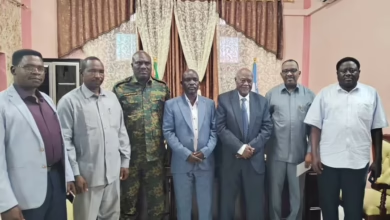
Speech by the vice-chair of the Council of Sovereignty in a workshop discussing the proposals to modify the law on journalism and publications of the press for the year 2009
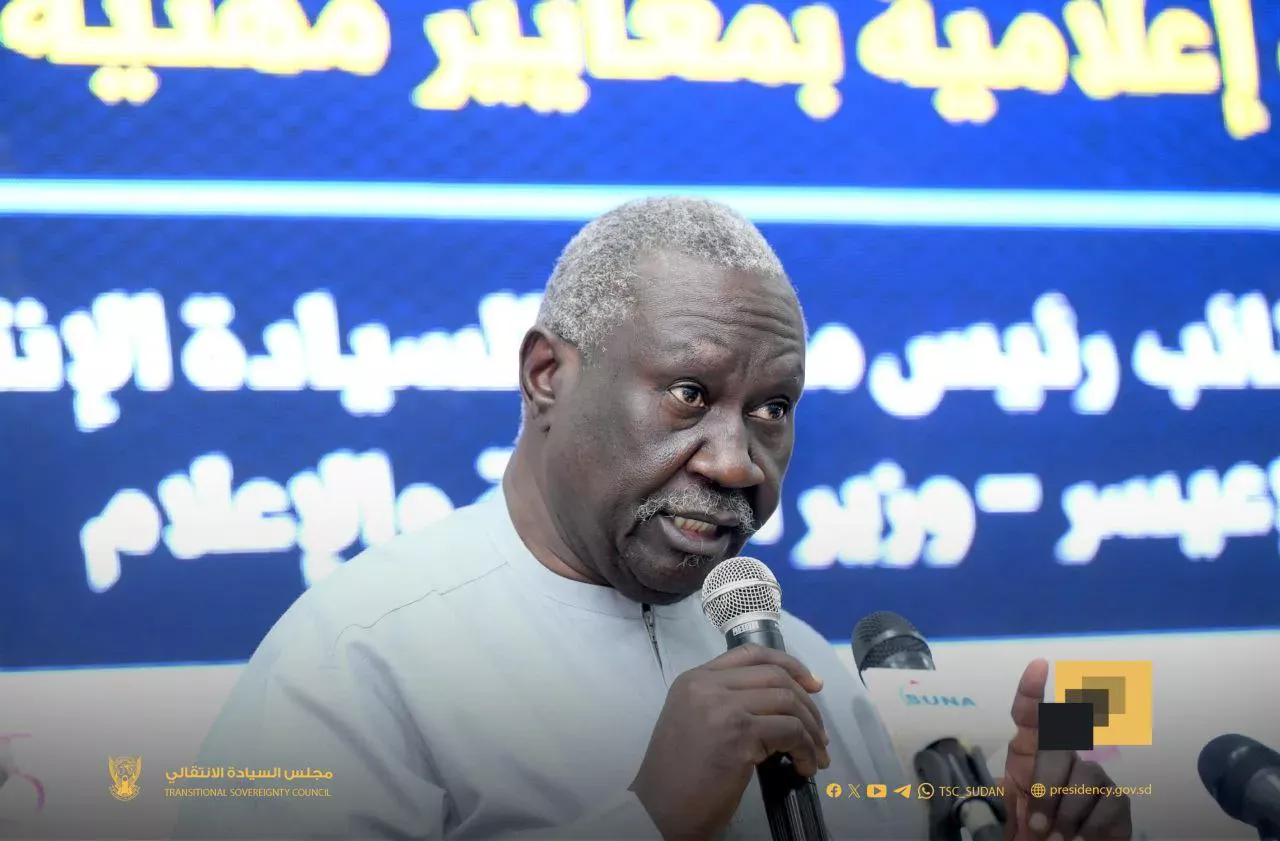
The vice-president of the Council of Sovereignty of Transition, Commander Malik Air, said that the scene that the country crosses imposes on the State, the institutions and the people, an examination of legal frameworks, which regulate public space, the greatest number of which is the right of the press, to ensure freedom of expression, preserve the dignity of the journalist and establishes a professional media, Balanced, reflects the means of the future.
His Excellency underlined the need to create a real partnership between the government, the journalistic community, professionals and stakeholders, in a framework of transparency, mutual respect, confidence and desire
Shared in the progress of Sudan.
The vice-chair of the sovereign council confirmed
In his speech in the opening of the workshop discussion of proposals for modification of the right of the press and the press for the year 2009, organized by the Ministry of Culture and Information under the slogan (Media Freedom to Professional Standards) affirmed the commitment of the complete advice of sovereignty to create the political and legal environment which allows the media to carry out its message, in a climate of freedom and responsibility.
The following is the text text:
Speech of the vice-chair of the Sovereign Council
In a discussion workshop offering the modification of the press law and press publications for 2009
May 26, 2025
Mr. Minister of Culture and Information
- Ministers
- Media and the media, journalists and laws
- Representatives of civil society and relevant organizations
- The generous attendance
Peace be upon you and mercy and blessings of God
I am happy and honored to be among you today, in this generous group, to participate in the workshop on “laws on journalism in Sudan”, which is organized by the Ministry of Culture and Information in a specific period and in a very sensitive national circumstance.
The organization of this workshop reflects the awareness of the institution of the media and the State, as the importance of the media as a pillar of democratic construction, and as an essential partner in the consolidation of the rule of law and institutions.
The free and responsible media are not a political luxury, but rather a prerequisite for the realization of sustainable development, the protection of rights and the promotion of conscious societal participation and hatred of patients and regional discourse.
Participants
Our country has undergone major transformations, including the rapid rebellion of the support militia, and despite this, our country is still heading towards new horizons, the stability and the journey of our research of democracy is still underway.
This step, as a state, institutions and people, is imposed on us to reconsider legal frameworks, which regulate public space, whose press law is above all. We want a law that guarantees freedom of expression, preserves the dignity of the journalist and establishes a professional and balanced media, reflects reality and sheds light on the future.
This will only be possible by a real partnership, between the government, the journalistic community, professionals and stakeholders, in a framework of transparency and mutual respect. We want this law to be built not only on paper, but on confidence and the common desire to advance our dear homeland.
Here, I confirm the commitment of Full Sovereigty Council to support these efforts and create the political and legal environment which allows the media to carry out its message, in a climate of freedom and responsibility.
Generous attendance
I would like to focus on a very important subject, which is the cornerstone of the future of media work in our country, which is the legal framework for the press and publications in Sudan, with what it has and what it is.
In recent decades, Sudan has witnessed several attempts to organize journalistic work, the most recent of which was the right to the press and publications of 2009, which came in a different political and media time from our reality today, at the time of the development of the means of communication and the image of information, all these attempts were similar to the rituals of transit because they are in the detention and dictatorial systems.
This framework, despite the fact that it contains certain positive points, no longer meets the requirements of the scene, neither to the digital revolution, nor to the democratic transformation that our people seek, nor to our international obligations in the field of human rights and freedom of expression. Where it was one of the most important problems and challenges raised by this current framework:
1. Conflict of powers:
The overlap of roles between regulatory organizations, such as the National Press and Publications Council, and other security and management destinations, weakening the principle of press independence and exposing media institutions to non -professional pressures.
2. Excessive restrictions on freedom of publication:
The law still contains bulk texts which allow the judgment of newspapers and the responsibility of journalists, on the basis of inaccurate concepts, such as “violating national security” or “harming the public interest”, without a clear definition which should be addressed during future legislation.