
War of the fifteenth April in Sudan … Stop the mental health services for children and the increase in cases of mental and neurological diseases, bitter reality and difficult solutions
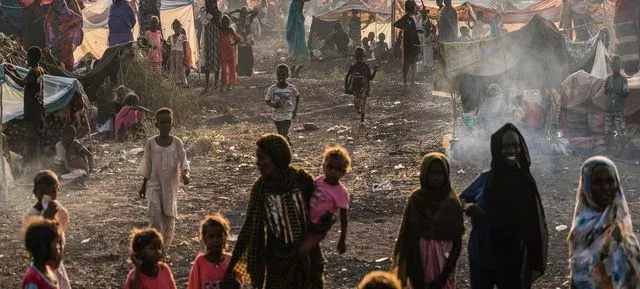
The current war in Sudan since the fifteenth April 2023 AD has produced serious repercussions on human health, in particular children who have been killed and moved by violent conflicts in a number of states. Citizens have lost their property and were subjected to travel, death, displacement and use to neighboring countries. Many families have also lost their family, have slipped into the circle of poverty and extreme deprivation, and a large number of girls and children have been subjected to serious violations such as murder, rape and intimidation, in addition to the loss of fundamental rights.
Cases of acute malnutrition emerged in children, which led to the spread of various diseases and the emergence of dwarfs, and the percentage of drug use increased in displaced and homeless children and those who are linked, including those of shelters and poor residential districts. The reports published by the Supreme Committee for the Control of Narcotics have revealed a significant increase in drug consumption and drug addiction rates in children, with an almost complete absence of social protection institutions, especially in states attending violent fights, which have made children dependent on alcohol and drugs of all kinds, and symptoms of mental and neurological diseases appeared.
The mental health services, in particular specialized psychiatric and neurological hospitals which were previously concentrated in the state of Khartoum, which were closed due to the war.
Earlier, the Sudanese Ministry of Health revealed its plan to extend psychotherapy services, but this plan has not been fully implemented, and hospitals or private centers have not been created to treat children with mental illness, but rather to announce its intention to establish five hospitals and specialized health treatment centers without indicating their children’s allocation.
A certain number of citizens have complained of the high cost of treatment of mental illnesses, as hospitals and centers do not accept a health insurance card, and coverage does not include treatment of mental illness and has reached the lowest cost to treat a psychiatric patient for a month to more than two thousand dollars. One of the citizens said: “My brother, the patient died from the side of the road because of my inability to treat him.”
The psychiatry consultant described social stigma towards those who use psychotherapy and those who provide them with “negative discrimination”. Each child is admitted to a hospital or mental health center which is considered to be a stigmatization of society. They underlined increasing mental injuries, while the Federal Ministry of Health has classified the specialization of psychiatry as one of the few specialties in Sudan, because the number of consultants was only 23 before the start of war, with a significant increase in the number of patients and the decline of services in specialized hospitals, due to the migration of working executives and the lack of elongated budgets.
They said that the “Tijani Al -Mahi” hospital in Omdurman, the first hospital in Sudan, received around 200 patients daily before the war.
The specialists demanded the creation of government hospitals concerned by mental and mental health, stressing that many Sudanese have been subject to psychological trauma due to the economic collapse resulting from the war.
Dr. Abdel -Qader Al -Amin, his father, secretary -general of the National Child Protection Council, said that the rapid support forces have committed brutal acts against children in a certain number of states, noting that the realization of integrated mental health and a decent life for children avoids educational and disintegration of families. He added: “We will not calm down so that the militia is outside the place.” He continued: “Social protection aims to build a safe and stable child who believes in peace.”
His father stressed that the childhood database helps to obtain justice for children and to provide them with services, stressing that he provides scientific indicators and statistics on the number of children and their needs across the country, which contributes to reducing societal imbalances in the future. He also explained that work includes prudent and disabled children in cooperation with various national institutions, according to a scientific method which contributes to socialization and national education, especially since the current circumstances have imposed this necessity.
The Khartoum State Ministry of Health had revealed earlier in 2023 after JC, the high incidence of mental illness, announcing a plan to introduce specialization in psychiatry in health centers and include mental health services in primary care services. She pointed out that cases reached 60%, with a conversion of mental illness in the form of chronic diseases, after the rate of mental disorders varied between 20% and 30% before 2008. The ministry indicated that the reason for the high percentage is due to the frequency of patients with chronic diseases on health centers and hospitals, in particular for cases of anxiety, depression and psychological pressure, in particular for cases of violation.
Dr. Bashar Abdel Rahman, psychiatrist and head of the Port Sudan hospital psychiatry department for mental and nervous diseases, was offered in his article on the current mental health situation that the number of specialized doctors working in the field of psychiatry in the state of the Red Sea reached 12 specialists, with a shortage of medical staff formed, and the absence of specialized departures children with children affected.
He underlined that there are challenges faced by specialization in psychiatry, the most important of which is discrimination against psychiatric patients, and false ideas distributed in the society on which receives psychotherapy. He also indicated the weakness of the availability of psychiatrists in state localities, as well as the propagation of drugs and the high rates of their abuse among young people.
Dr. Bashar called for the need to raise awareness of the community and to reduce social stigma that pursues psychological patients while receiving treatment, calling at the same time to establish a new hospital with a capacity of 100 beds.
Amani Hussein, who lived in the jabra district of the city of Khartoum and was forced to go to Sennar because of the war, says that she had a boy and a girl suffering from psychological and neurological problems and diseases, ranging from the ages of Khartoum, and they received treatment in the psychiatric and neurological clinic in Khartoum. But because of the war, she could not obtain the necessary care for them, because there are no hospitals concerned by mental health for children. She adds that children’s treatment costs are high and that they do not have the money to treat them, and there are no hospitals or health centers anxious to treat mental and neurological diseases.
As for Nadia Al -Tayeb, the mother of the child, Noha Ahmed, who is ten years old, and was inhabited by the city of Bahri, she was forced to move the state of Gedaref because of the war. She emphasizes that her daughter suffers from psychological and neurological problems and diseases and needs costly drugs and continuous health care. Previously, she followed her condition with a doctor who specializes in mental and neurological health, but now she lives in an isolated village in the state of Gedaref, and she went to the city several times without finding hospital or health center specializing in the treatment of children with mental and neurological diseases, and there is no such case.
Ahmed Al -Tayeb, the father of twin children, Hassan and Hussein, who suffer from mental and neurological diseases at the age of nine, says that he was moved from his Khartoum family in the state of Blue Nile in the city of Damazin. He adds that he suffered from the lack of health services for children with mental illnesses, because he accompanied his two children to the general hospital and found no specialist or consultant in mental illness, and he had to go to the ambulatory clinics of a mental and neurological consultant, at a high cost, and there is no state or beautiful to hypnotize mental and neurological children in the blue.