
Organized by the Ministry of Education in cooperation with UNESCO, Al-Badawi attends the conclusion of the activities of the workshop on the transition plan for education.
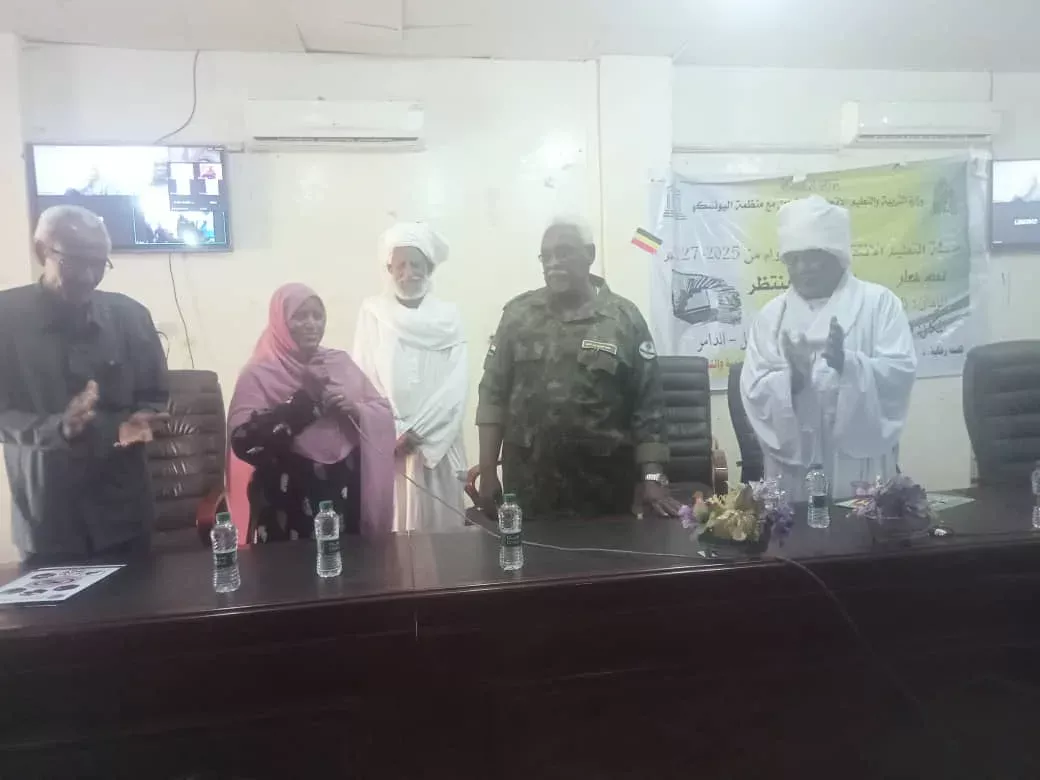
A workshop to discuss and approve the priorities of the education transition plan, organized by the Federal Ministry of Education in cooperation with UNESCO, concluded today in Damar. The closing speech was delivered by the Acting Governor of Nile State, Muhammad Al-Badawi Abu Qarun, who greeted the workshop participants, including teachers and education experts, stressing that the teacher is the one who produces leaders and politicians and those who occupy all positions in the state and executives in all fields. , emphasizing that science is the means to rid the nation of many afflictions. Al-Badawi added that the state is proud to host such events, and it is even more proud to host Sudanese certification works.
While Dr Ayman Badri, Coordinator of the UNESCO Office in Khartoum, confirmed that the organization works in perfect harmony and coordination with the Ministry of Education and confirms that it is at its side to attract the support of regional and international organizations, especially since she leads the working in the field of education in Sudan and behind him is an international expert and five people from the office who work behind him to carry out this work, the president of UNESCO in Paris and others from the International Institute for Educational Planning, as well as specialists in the field. technical and technical education.
Al-Badri called on regional and international organizations to stand alongside the ministry and work jointly to implement this plan, expressing hope for joint work with the ministry to promote it internally and internationally. outside Sudan, emphasizing that the plan prepared by the workshop participants will be a guide and a guide for international organizations to work on in Sudan.
While Dr Umm Salamah explained, the national expert at UNESCO, said the plan prepared during this workshop will be presented to UNESCO for consensus and then referred to the Ministry of Education for approval during another workshop at the end of December, expressing hope that the workshop will have achieved its objectives and developed an ambitious plan from which the education sector will reap the benefits.
The workshop resulted in a number of recommendations and priorities, including overcoming middle-stage barriers, addressing admission policies for technical education students in universities, attracting new partners for educational partners, rehabilitating educational facilities and institutions affected by crises, and provide a school meal for students, teachers and workers.

Follow us